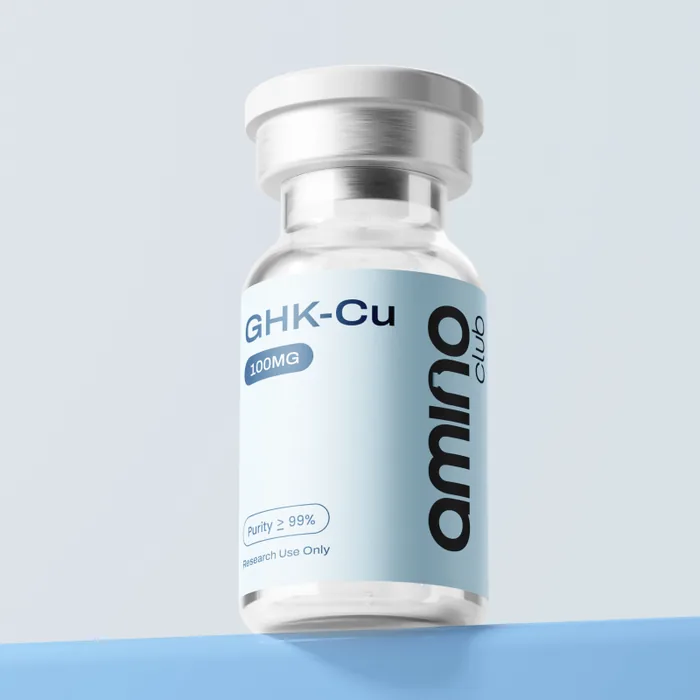
A copper(II) complex of the tripeptide glycyl-L-histidyl-L-lysine, first isolated from human plasma in 1973 and studied since for dermal matrix signalling.
- Sequence
- Gly-His-Lys (GHK), as the copper(II) complex
- Molecular formula
- C14H22CuN6O4
- Molecular weight
- 401.9 g/mol (free GHK peptide: 340.4 g/mol)
- CAS number
- 89030-95-5 (copper complex); 49557-75-7 refers to the free GHK peptide
- Appearance
- blue lyophilised powder
- Strengths available
- 50mg, 100mg per vial
- Purity
- ≥99% by HPLC, identity confirmed by mass spectrometry
- Released against
- the Certificate of Analysis for its own batch
About GHK-Cu
GHK is a tripeptide, glycyl-L-histidyl-L-lysine, first isolated from human plasma, where its concentration falls measurably with age. That observation started the research programme and still frames most of it. GHK binds copper(II) with high affinity, and the physiologically relevant species is the complex rather than the free peptide, which is why the compound is written GHK-Cu.
The copper is structural, not an additive. The histidine imidazole and the terminal amine form a coordination site holding the ion in a specific geometry, and much of the reported activity depends on that complex remaining intact.
What the research covers
The most cited work is transcriptional. Expression profiling has reported GHK-Cu shifting a large number of human genes, described in terms of resetting a fibroblast expression profile rather than driving a single pathway. That breadth is the interesting part and also the interpretive difficulty: a compound reported to move thousands of transcripts resists a clean mechanistic account.
Narrower strands cover collagen and glycosaminoglycan synthesis in dermal fibroblast models, metalloproteinase and antiprotease balance in matrix remodelling, and copper delivery to enzymes such as lysyl oxidase that require it. A smaller literature concerns follicular signalling, which is where the related tripeptide AHK-Cu is usually studied instead. Published work is indexed on PubMed.
Handling GHK-Cu
Handling is less forgiving than for most of the catalogue, because the coordination complex rather than the peptide is what the literature describes. GHK-Cu is light-sensitive and pH-dependent: outside a fairly narrow range the geometry changes and the species in the vessel is no longer the one the research concerns.
The characteristic blue colour is a rough visual indicator that the complex is intact, and loss of it is a reason to question a working solution rather than proceed. Store sealed vials at -20°C, protect solutions from light, and prepare them fresh. Solvent options are under reconstitution supplies.
Other formats
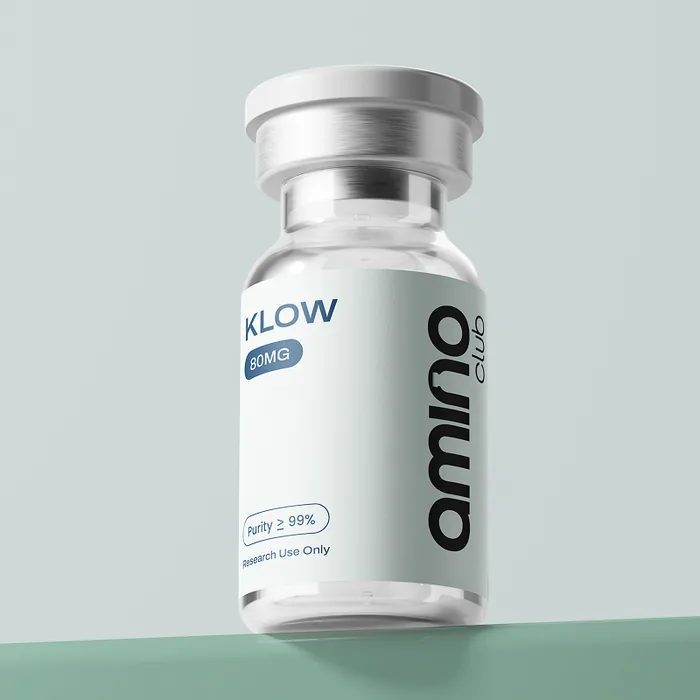
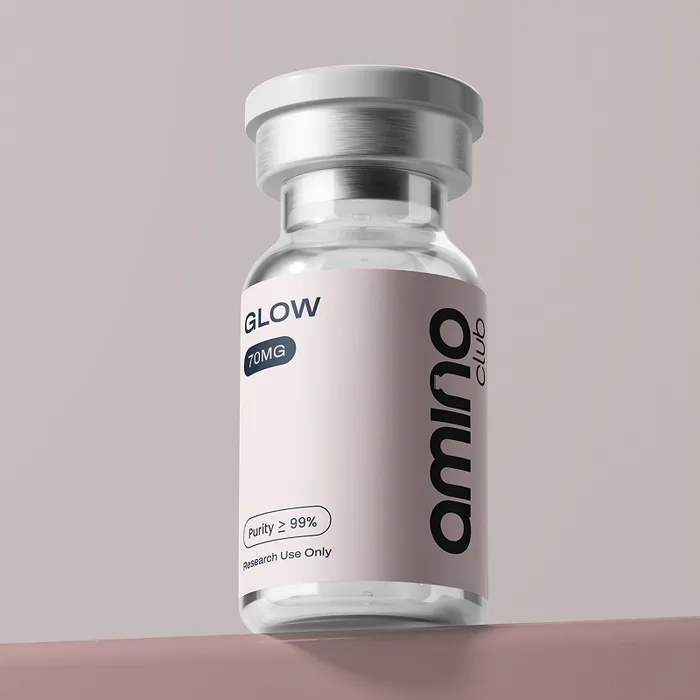
GHK-Cu is also supplied as a metered 25ml GHK-Cu nasal spray, and appears as a component of the GLOW and KLOW preparations.
Common questions about GHK-Cu
Why does the copper matter?
The reported activity belongs to the copper complex, not the free tripeptide. Copper sits in a coordination site formed by the histidine and the terminal amine, and if that complex is disrupted, the material is no longer the species the literature describes.
Why is GHK-Cu blue?
The colour comes from the copper(II) ion in its coordination geometry. It is a useful rough check: a working solution that has lost its blue colour has likely lost the intact complex.
Which CAS number applies to GHK-Cu?
The copper complex is CAS 89030-95-5. CAS 49557-75-7 belongs to the free GHK peptide, but many suppliers list it for the copper complex, along with the free peptide’s weight of 340 g/mol. The complex weighs 401.9 g/mol.
How does GHK-Cu differ from AHK-Cu?
Both are copper-binding tripeptides. GHK-Cu occurs naturally in plasma and has the larger literature, centred on dermal matrix and gene expression. AHK-Cu is synthetic and is studied mainly in follicular models. The comparison page covers the details.
How should GHK-Cu be stored?
Sealed vials are held at -20°C. Solutions are protected from light, kept within a stable pH range, and prepared fresh rather than stored.