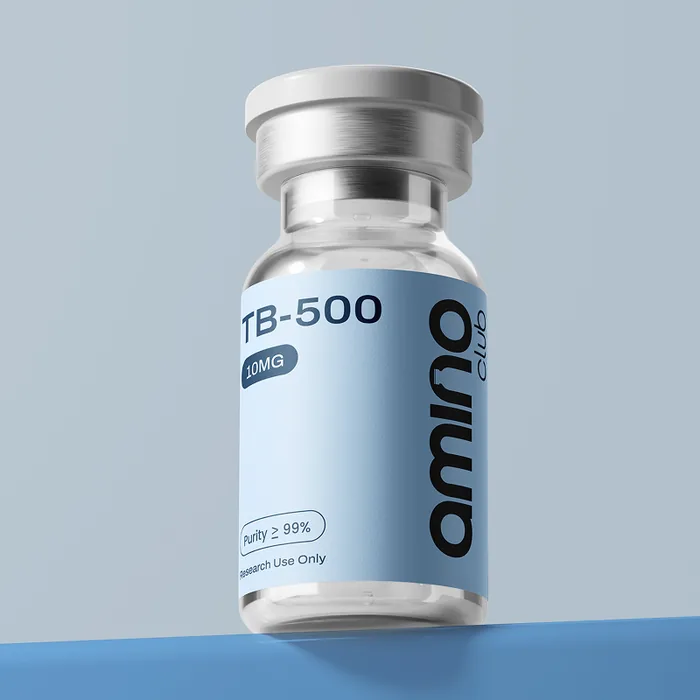
The synthetic actin-binding region of thymosin beta-4: seven residues, not the 43-residue parent protein it is frequently mistaken for.
- Sequence
- Ac-Leu-Lys-Lys-Thr-Glu-Thr-Gln (Ac-LKKTETQ), thymosin beta-4 residues 17–23
- Molecular formula
- C38H68N10O14
- Molecular weight
- 889.0 g/mol
- CAS number
- 885340-08-9
- Appearance
- white lyophilised powder
- Strengths available
- 2mg, 5mg, 10mg per vial
- Purity
- ≥99% by HPLC, identity confirmed by mass spectrometry
- Released against
- the Certificate of Analysis for its own batch
About TB-500
TB-500 is a synthetic heptapeptide, sequence LKKTETQ with an acetylated N-terminus, corresponding to residues 17 to 23 of thymosin beta-4. That region is the protein’s actin-binding domain. It is routinely described as being thymosin beta-4, and it is not: the parent is a 43-residue protein with several activities, and this reproduces one functional region of it.
That distinction changes how the literature should be read. A large share of the work attributed to TB-500 was carried out on the full-length protein, and equivalence between the two has never been established. Where a study reports an effect, it is worth checking which molecule was actually used, because the fragment lacks the rest of the parent sequence and any activity that depends on it.
What the research covers
The core mechanism is actin sequestration. Thymosin beta-4 is the principal G-actin sequestering protein in mammalian cells, maintaining a pool of monomeric actin available for rapid polymerisation, and the LKKTETQ region is the part responsible for that binding. The research interest follows directly: cell migration, cytoskeletal reorganisation, and the movement of cells into a wound bed.
Downstream strands cover angiogenesis, inflammatory signalling, and cardiac and corneal models. One molecule is studied for cell motility and the other for vascular signalling, which is why TB-500 and BPC-157 are so often run together rather than as alternatives.
Full-length thymosin beta-4 has reached clinical trials in specific indications. TB-500 as a discrete entity has not, and conflating the two overstates the evidence considerably. Published work on both the parent protein and the fragment is indexed on PubMed.
Handling TB-500
Supplied lyophilised in sealed vials, stable at ambient temperature in transit and held at -20°C long term. For a seven-residue sequence, adsorption to glass and plastic at low working concentration is the practical loss to account for, and it is systematic rather than random.
Identity confirmation carries more weight here than the purity figure: short peptides are simple to synthesise and correspondingly easy to misidentify, so mass spectrometric confirmation is what establishes that the vial holds Ac-LKKTETQ and not a near neighbour. Solvents are listed under reconstitution supplies.
Other formats
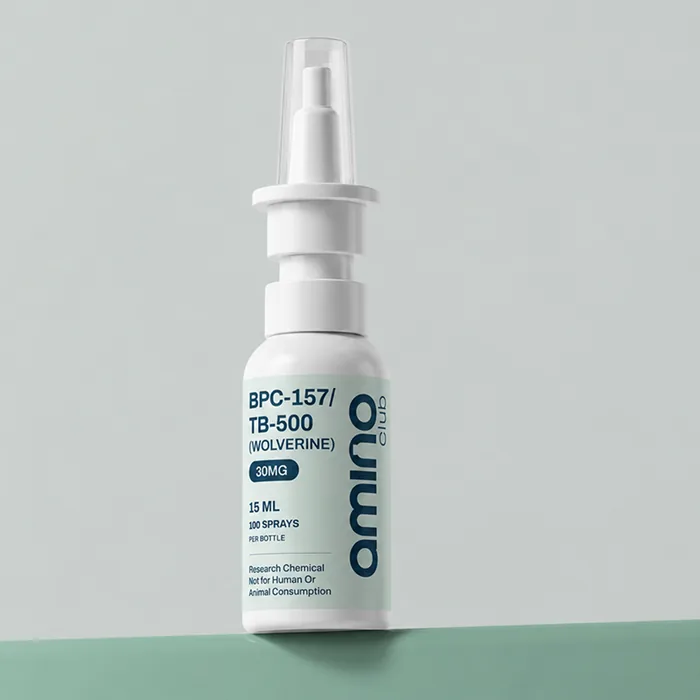
TB-500 is also supplied combined with BPC-157 as the BPC-157 / TB-500 blend, and in that blend’s metered intranasal form.
Common questions about TB-500
Is TB-500 the same as thymosin beta-4?
No. Thymosin beta-4 is a 43-residue protein. TB-500 is a synthetic seven-residue fragment of it, residues 17 to 23, which is the actin-binding region. Many suppliers list the full protein’s formula and weight (C212H350N56O78S, about 4963 g/mol) for TB-500, which is incorrect for the fragment.
Why is TB-500 acetylated?
N-terminal acetylation is a common modification in synthetic peptides, generally used to protect the chain against degradation by aminopeptidases. It is part of TB-500’s defined identity, so non-acetylated LKKTETQ is a different compound with a different mass.
Why is TB-500 studied alongside BPC-157?
Their mechanisms are independent. TB-500 is studied for actin dynamics and cell migration, BPC-157 for angiogenic and vascular signalling, so the two address different parts of the same research questions rather than competing for them.
How is each batch verified?
Every batch is tested to ≥99% purity by HPLC, and mass spectrometry confirms the 889 g/mol identity, which distinguishes the acetylated fragment from both the non-acetylated sequence and the full-length protein. Each vial carries a batch number matching its Certificate of Analysis.
How should TB-500 be stored?
Sealed lyophilised vials are held at -20°C long term and tolerate ambient temperature during transit. Reconstituted solutions are kept refrigerated, protected from repeated freeze-thaw cycles, and prepared at concentrations high enough that surface adsorption does not dominate.