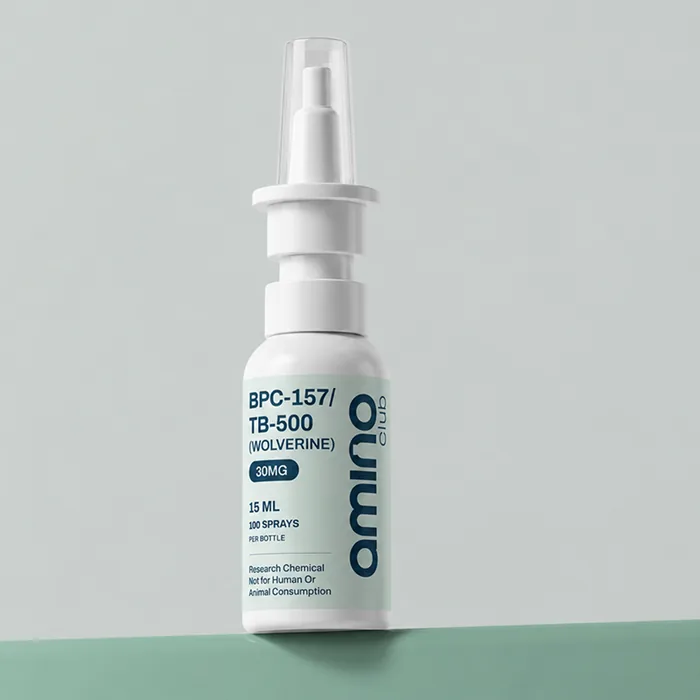
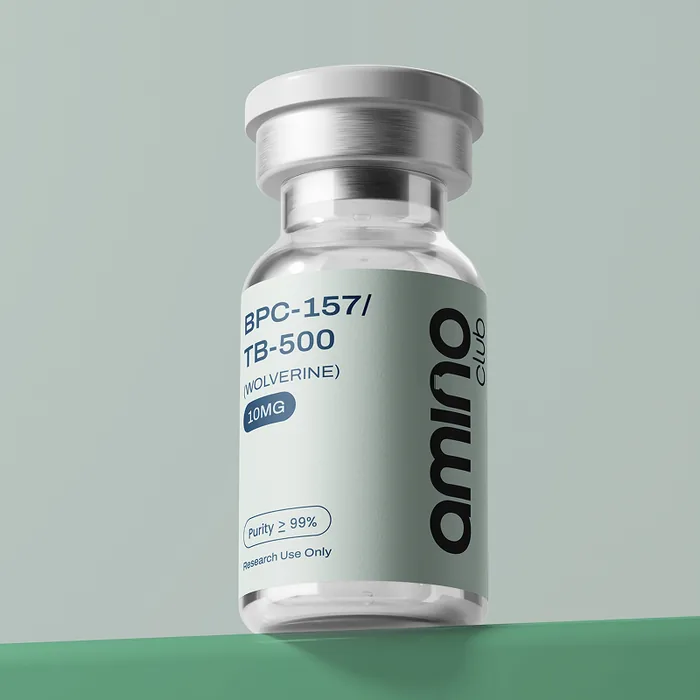
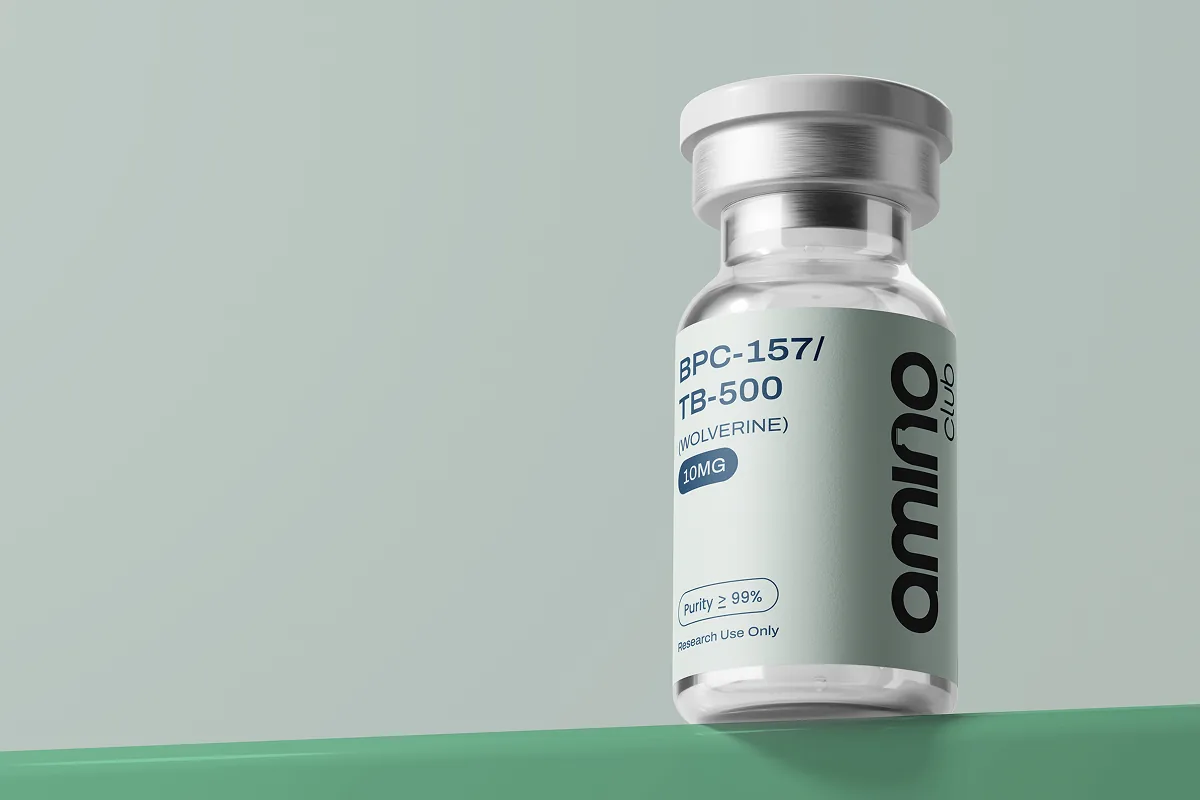
Two independent repair mechanisms in one vial — vascular signalling and cell migration — supplied together because they do not overlap.
- Strengths available
- 10mg, 20mg total per vial
- Appearance
- white lyophilised powder (combined cake)
- Purity
- ≥99% by HPLC, identity confirmed by mass spectrometry
- Released against
- the Certificate of Analysis for its own batch
About BPC-157 / TB-500
This preparation combines BPC-157 and TB-500 in a fixed ratio. The rationale is mechanistic independence rather than reinforcement: BPC-157 is studied for angiogenic signalling through the VEGFR2 pathway, TB-500 for actin sequestration and the cell migration that depends on it.
One concerns the blood supply reaching a site; the other concerns cells arriving at it. Because neither substitutes for the other, combining them is a coherent design choice rather than a marketing one.
What the research covers
The question a combined preparation answers is whether the two mechanisms together change an outcome. The question it cannot answer is which one did it, or whether they interacted — attribution requires BPC-157 and TB-500 run alongside as single agents.
Fixed-ratio preparations also fix the ratio, which is a limitation where the ratio is the variable of interest. The BPC-157 versus TB-500 comparison sets out the two mechanisms in detail. The tissue repair research peptides hub sets out the mechanisms in this group.
Handling BPC-157 / TB-500
Supplied lyophilised as a combined cake. The components differ considerably in length — fifteen residues against seven — so the preparation inherits the stricter requirement of the pair rather than an average of the two.
Reconstitute gently against the vial wall, store sealed at -20°C, and prepare working solutions fresh. Adsorption behaviour follows the shorter component.
Solvent options are under reconstitution supplies.
Other formats
The same combination is supplied as a metered BPC-157 / TB-500 nasal spray, and each component is available as a single compound: BPC-157 and TB-500.
Common questions about BPC-157 / TB-500 (Wolverine)
Why combine BPC-157 and TB-500?
Their mechanisms are independent: BPC-157 is studied for angiogenic signalling and TB-500 for cell migration. Combining them tests both at once without one duplicating the other.
Can an effect be attributed to one component?
No. A fixed combination cannot show which component produced an effect or whether components interacted. That requires the single compounds run alongside it.
Can the ratio between components be changed?
No. The ratio is fixed in the vial, so studies where the ratio is the variable of interest need the single compounds.
How should it be handled?
According to the most demanding component in the mix, since the preparation inherits the strictest requirement of its parts.