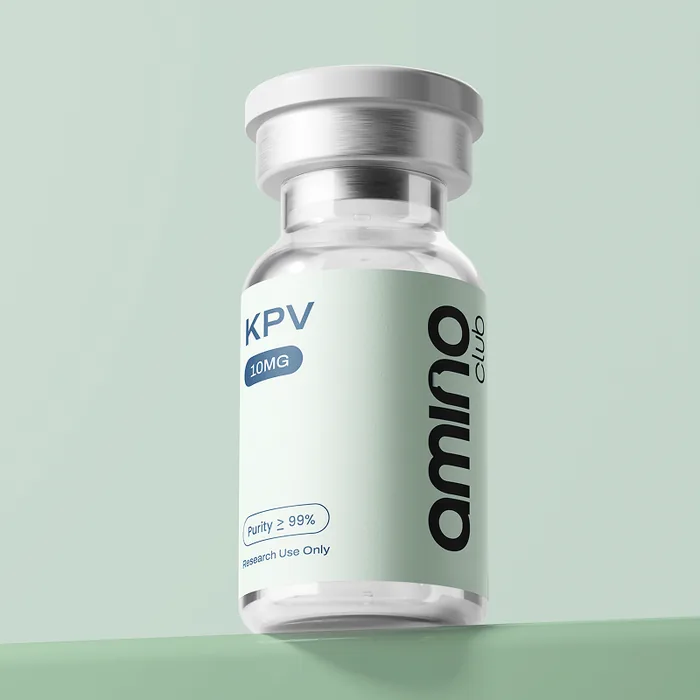
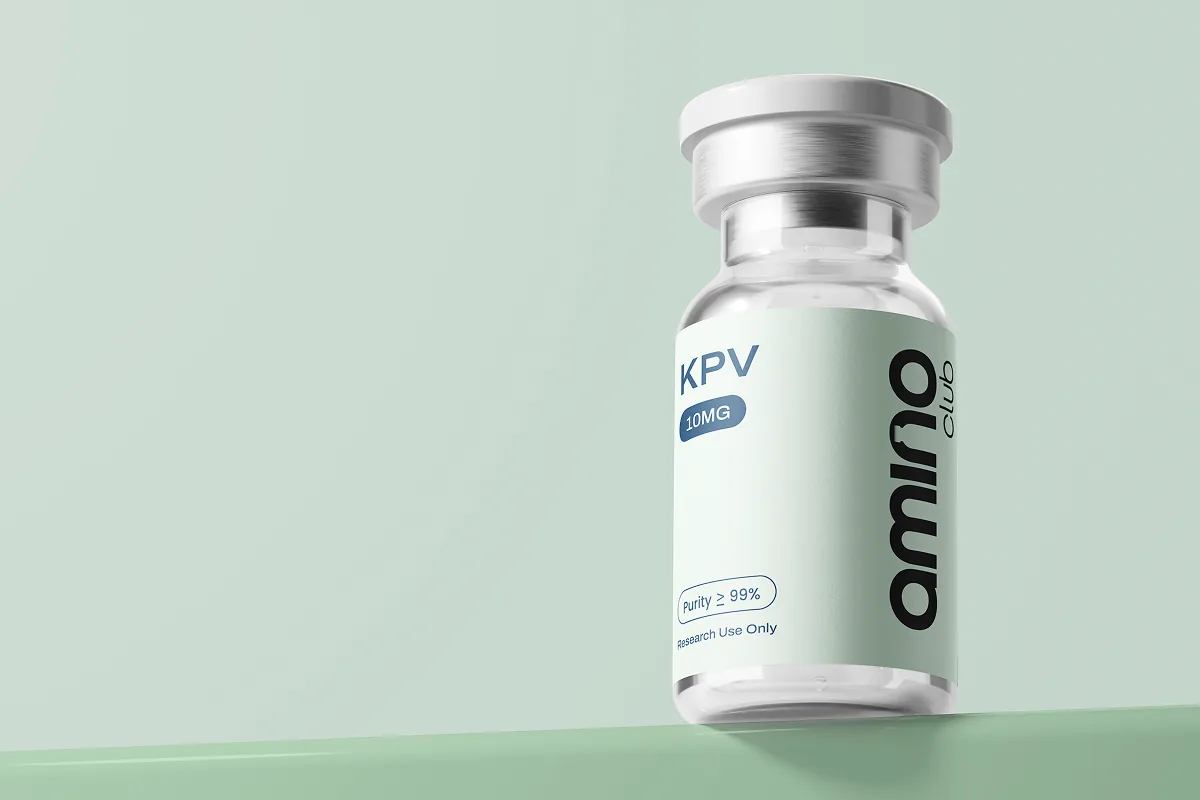
The last three residues of alpha-MSH: the fragment that keeps the anti-inflammatory activity and drops the pigmentation activity completely.
- Sequence
- Lys-Pro-Val (alpha-MSH 11–13)
- Molecular formula
- C16H30N4O4
- Molecular weight
- 342.4 g/mol
- CAS number
- 67727-97-3
- Appearance
- white lyophilised powder
- Strength
- 10mg per vial
- Purity
- ≥99% by HPLC, identity confirmed by mass spectrometry
- Released against
- the Certificate of Analysis for its own batch
About KPV
KPV is the tripeptide lysine-proline-valine, residues 11 to 13 of alpha-melanocyte stimulating hormone. Alpha-MSH has two largely separable activities: melanocortin receptor agonism driving pigmentation, and an anti-inflammatory effect. This fragment carries the latter and loses the former.
Notably, it appears to act at least partly without melanocortin receptor binding, which is what makes it mechanistically interesting rather than merely a smaller version of the parent. Reported routes are intracellular: interference with NF-κB signalling and, in intestinal epithelium, uptake through the peptide transporter PepT1. Three residues is about as small as a bioactive peptide gets, which makes it cheap to synthesise, unusually stable and small enough to cross barriers that exclude larger molecules.
What the research covers
Most published work is in gut inflammation models, colitis in particular, and in skin, where anti-inflammatory readouts dominate. Work covers NF-κB signalling and downstream cytokine expression, and a smaller antimicrobial strand shared with its parent hormone and with LL-37.
The uptake mechanism matters for study design: if transport is carrier-mediated, the intracellular concentration reached depends on transporter expression in the chosen cell type rather than on the concentration applied. The comparison that clarifies KPV most is with the full melanocortin agonists: Melanotan II engages the receptor family broadly and is studied for pigmentation and sexual behaviour, while KPV, from the same parent sequence, is studied for neither. Published work is indexed on PubMed.
Handling KPV
Supplied lyophilised. A tripeptide is at the extreme end of adsorption risk: loss to glass and plastic surfaces at low working concentration is substantial and systematic, and it is the single most likely reason a calculated concentration and an actual one diverge.
Use low-binding plasticware, prepare fresh, and avoid long dilution chains where each transfer costs material. Store sealed vials at -20°C. Solvent options are under reconstitution supplies.
Common questions about KPV
Where does KPV come from?
It is the last three residues, 11 to 13, of alpha-melanocyte stimulating hormone, the fragment associated with the parent hormone’s anti-inflammatory activity.
Does KPV affect pigmentation?
No. The pigmentation activity of alpha-MSH depends on melanocortin receptor agonism, which this fragment does not reproduce.
How does KPV act if not through melanocortin receptors?
Reported routes are intracellular, including interference with NF-κB signalling, with uptake in intestinal cells through the PepT1 transporter.
Why does cell type matter in KPV experiments?
If uptake depends on a transporter, the concentration reaching the inside of the cell depends on how much transporter that cell type expresses, not just on how much peptide is applied.
How should KPV be stored?
Sealed vials at -20°C. Solutions are prepared fresh in low-binding plasticware, because tripeptides adsorb heavily to surfaces.