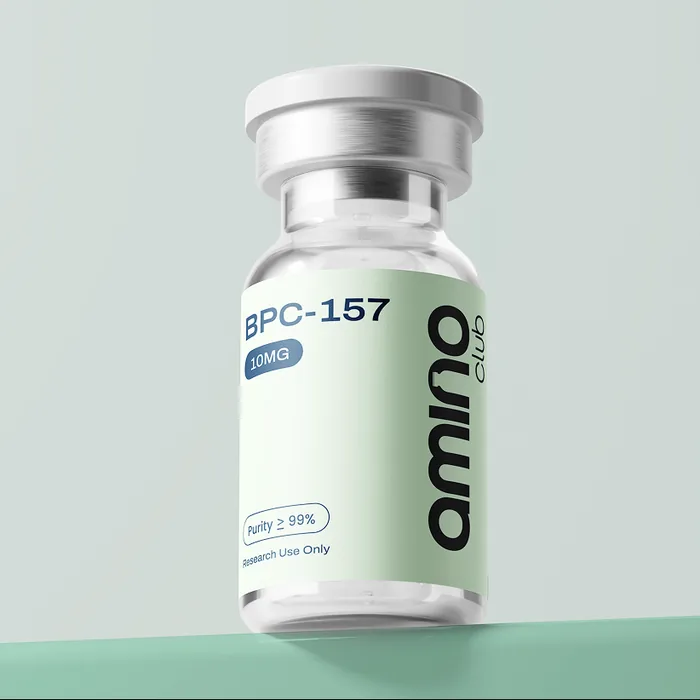
A fifteen-residue fragment of a protein found in gastric juice, unusual among peptides for surviving gastric acid and for having no characterised receptor after three decades of study.
- Sequence
- Gly-Glu-Pro-Pro-Pro-Gly-Lys-Pro-Ala-Asp-Asp-Ala-Gly-Leu-Val (GEPPPGKPADDAGLV)
- Molecular formula
- C62H98N16O22
- Molecular weight
- 1419.5 g/mol
- CAS number
- 137525-51-0
- Salt form
- acetate
- Appearance
- white lyophilised powder
- Strengths available
- 2mg, 5mg, 10mg, 20mg per vial
- Purity
- ≥99% by HPLC, identity confirmed by mass spectrometry
- Released against
- the Certificate of Analysis for its own batch
About BPC-157
BPC-157 is a synthetic pentadecapeptide, sequence GEPPPGKPADDAGLV, corresponding to a partial sequence of body protection compound, a protein first identified in human gastric juice. The fragment does not occur in isolation in the body. It is synthesised because the fragment, rather than the parent protein, carries the activity that interested the original investigators in Zagreb in the 1990s.
Two features set it apart from the rest of the catalogue. It is stable in gastric acid, which is rare for a peptide of any length and is the reason so much of the animal literature uses oral administration where a comparable sequence would simply be digested. And it has no established binding target. The mechanistic literature is therefore built on downstream observation rather than receptor pharmacology, which is a genuine gap rather than a footnote.
What the research covers
The largest strand concerns angiogenesis, with reported upregulation of VEGFR2 and signalling through the VEGFR2-Akt-eNOS axis. That vascular response is the mechanism most often invoked to explain findings across otherwise unrelated tissue models.
A second strand follows from its origin and covers the gastrointestinal tract: mucosal integrity, tight-junction protein expression and models of induced injury. A third concerns tendon, ligament and muscle models, usually framed in terms of fibroblast migration and collagen organisation. Smaller nitric-oxide and dopaminergic literatures also exist.
The evidence base is substantial in rodent models and close to absent in controlled human trials, and the distance between the two is wider than secondary sources usually acknowledge. Work with this compound is best designed from the primary literature rather than from summaries of it. Published studies are indexed on PubMed.
Handling BPC-157
Supplied as the lyophilised acetate salt. Sealed vials tolerate ambient temperature in transit and are held at -20°C for long-term storage. Direct solvent down the vial wall rather than onto the cake and swirl rather than shake; the fifteen-residue chain is not especially fragile, but foaming wastes material.
Purity matters more for this sequence than the headline figure suggests: truncated synthesis products of a fifteen-mer are difficult to separate and may carry activity of their own, which is why identity is confirmed by mass spectrometry rather than inferred from the HPLC trace. Solvent options are set out under reconstitution supplies.
Other formats
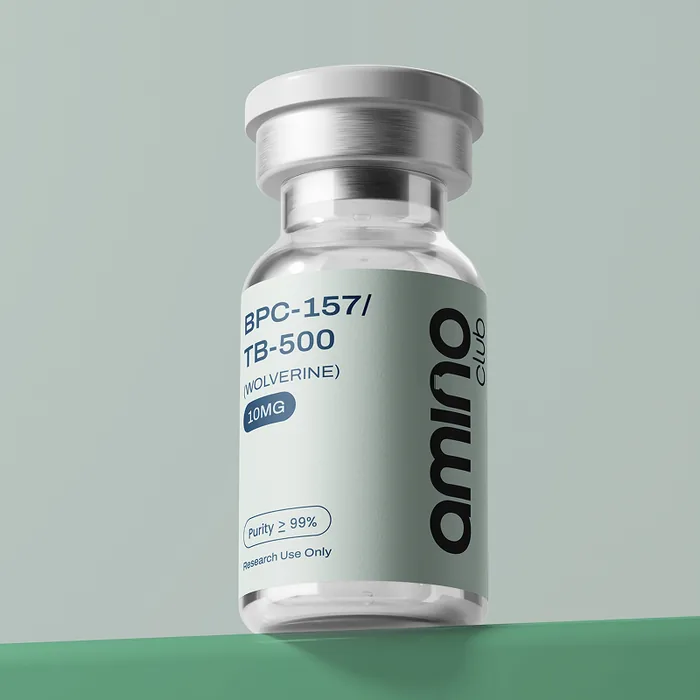
Where a reconstitution step is not wanted, the same sequence is supplied as a metered 15ml BPC-157 nasal spray. It is also available combined with TB-500 as the BPC-157 / TB-500 blend, and in that blend’s intranasal form.
Common questions about BPC-157
Is BPC-157 the same as body protection compound?
No. Body protection compound is the parent protein identified in gastric juice. BPC-157 is a synthetic fifteen-residue fragment of it, made because the fragment carries the activity of interest and is far easier to synthesise and characterise than the full protein.
Why does BPC-157 have no known receptor?
Despite three decades of study, no binding target has been characterised. Its reported effects are observed downstream, chiefly in VEGFR2 expression and nitric-oxide signalling, so its mechanism remains inferred rather than established.
What is the difference between the vial and the nasal spray?
The sequence is the same. The vial holds the lyophilised acetate salt, which is reconstituted in the lab and suits designs that need control over concentration. The spray is supplied ready-prepared in metered form, which suits designs where the intranasal route is itself under study.
How is each batch verified?
Every batch is tested to ≥99% purity by HPLC, and its identity is confirmed by mass spectrometry. Each vial carries a batch number matching its Certificate of Analysis, and the process is documented on the lab testing page.
How should BPC-157 be stored?
Sealed lyophilised vials are held at -20°C for long-term storage and tolerate ambient temperature during transit. Once reconstituted, solutions are kept refrigerated and protected from repeated freeze-thaw cycles.