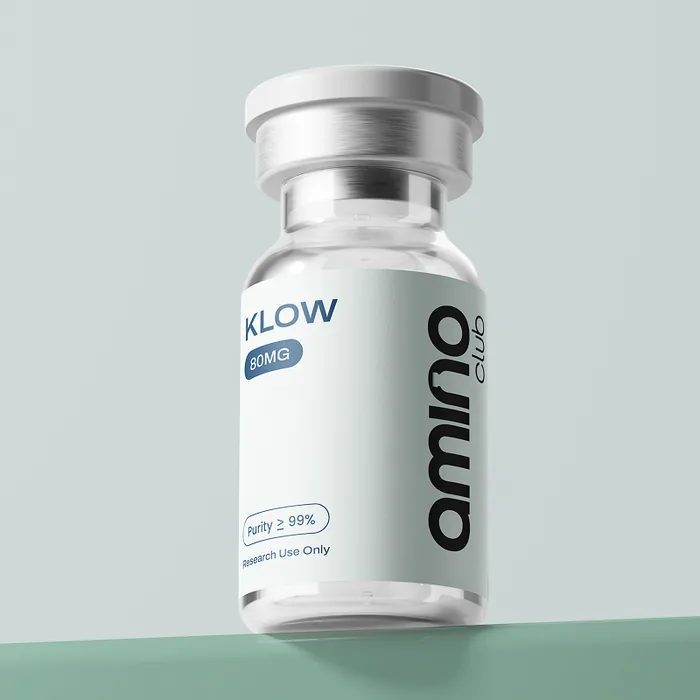
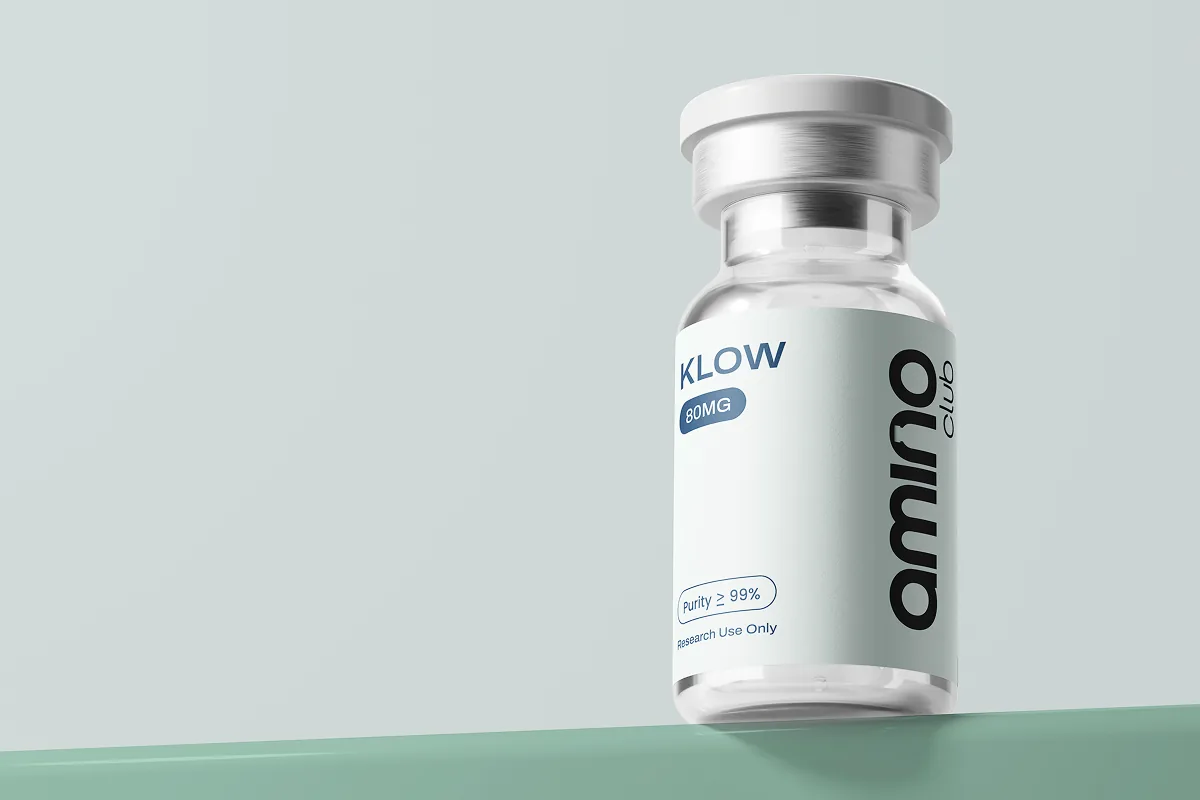
The GLOW combination with an anti-inflammatory tripeptide added — a fourth mechanism in the same vial, and a fourth thing you cannot attribute.
- Contains
- a fixed-ratio combination of GHK-Cu, BPC-157, TB-500 and KPV (component amounts stated on the batch Certificate of Analysis)
- Strength
- 80mg total per vial
- Appearance
- lyophilised powder (combined cake)
- Reference
- KLOW80
- Purity
- ≥99% by HPLC, identity confirmed by mass spectrometry
- Released against
- the Certificate of Analysis for its own batch
About KLOW
KLOW extends the GLOW combination by adding KPV, the C-terminal tripeptide of alpha-MSH studied for NF-kB pathway interference. The result is a preparation spanning angiogenic signalling, actin-dependent cell migration, copper-dependent matrix signalling and anti-inflammatory signalling at once.
Each of those mechanisms is independently reasonable. Combining four of them in a fixed ratio compounds the attribution problem rather than strengthening the rationale: the more components a preparation has, the less any single result from it can be explained.
What the research covers
Its legitimate use is screening — establishing whether a broad multi-mechanism intervention is worth decomposing. Any positive finding then needs following up with the single sequences: KPV, GHK-Cu, BPC-157 and TB-500.
Where a study is designed to test a mechanism rather than find one, this is the wrong instrument from the outset. The skin and cosmetic research peptides hub covers the three mechanisms in this group.
Handling KLOW
Supplied lyophilised. As with any multi-component cake, the handling requirement is set by the most demanding component: the copper complex for light and pH, and the tripeptide for adsorption at low concentration.
Protect from light, store cold and sealed, use low-binding plasticware, and prepare working solutions fresh rather than diluting from a stored stock.
Solvent options are under reconstitution supplies.
Common questions about KLOW
What is in KLOW?
The GLOW combination of GHK-Cu, BPC-157 and TB-500, with KPV added. Amounts for each batch are on its Certificate of Analysis.
Why does adding a component make attribution harder?
Each extra mechanism in a fixed mix multiplies the possible explanations for a result, so positive findings need decomposing with the single compounds.
Can an effect be attributed to one component?
No. A fixed combination cannot show which component produced an effect or whether components interacted. That requires the single compounds run alongside it.
Can the ratio between components be changed?
No. The ratio is fixed in the vial, so studies where the ratio is the variable of interest need the single compounds.