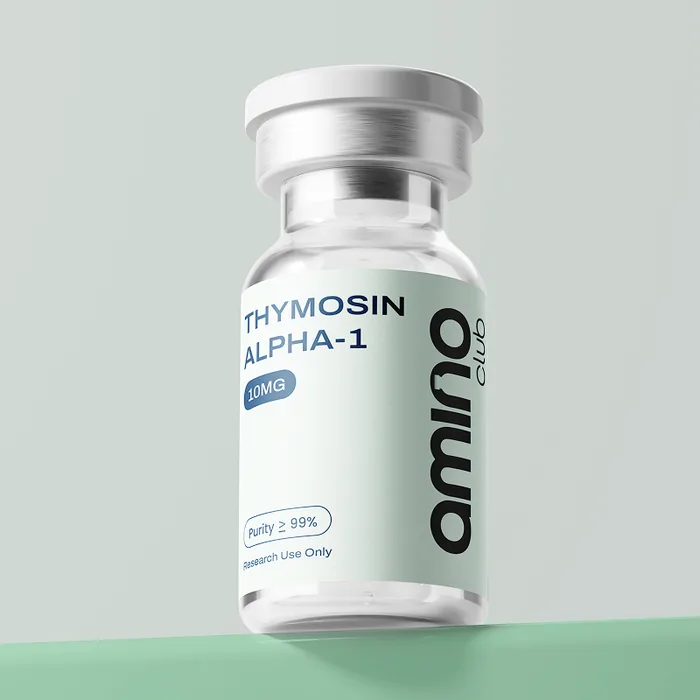
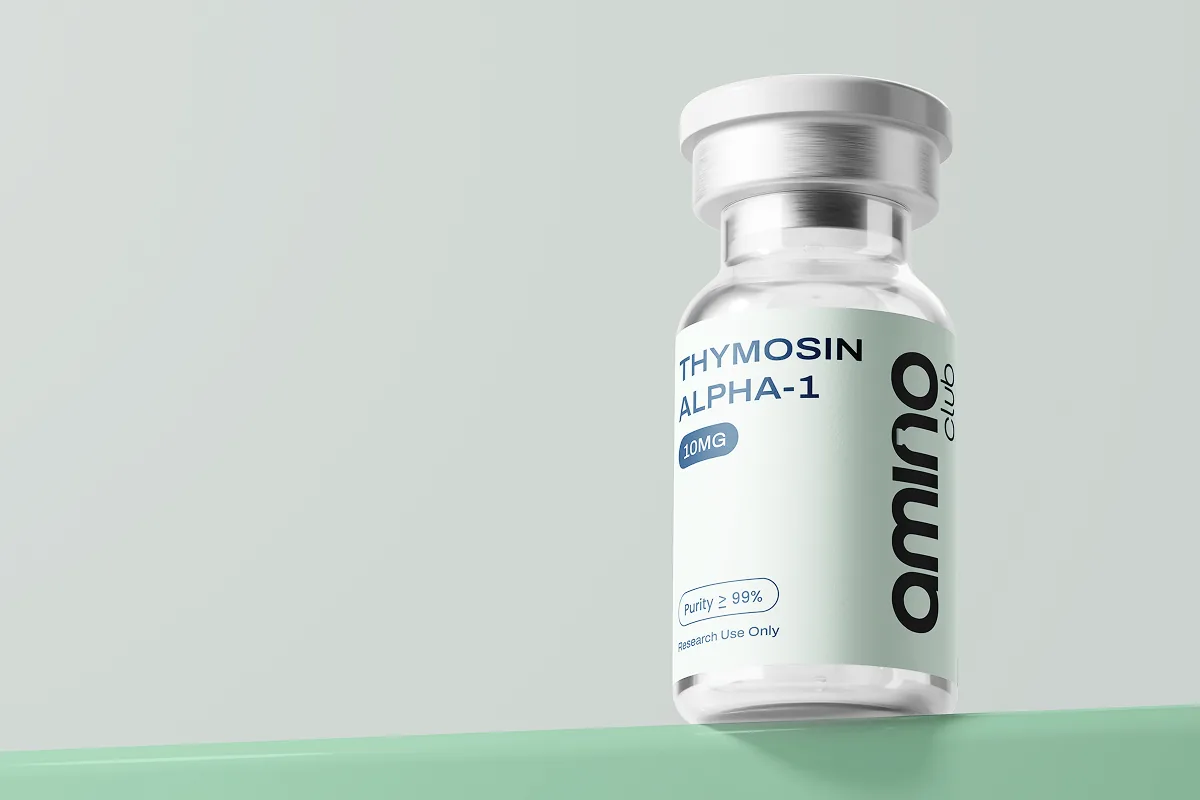
A defined 28-residue thymic peptide acting largely through Toll-like receptor signalling, and the only compound in this catalogue that is an approved medicine in a substantial number of countries.
- Sequence
- Ac-SDAAVDTSSEITTKDLKEKKEVVEEAEN (28 residues, N-acetylated)
- Synonym
- thymalfasin
- Molecular formula
- C129H215N33O55
- Molecular weight
- 3108.3 g/mol
- CAS number
- 62304-98-7
- Appearance
- white lyophilised powder
- Strengths available
- 5mg, 10mg per vial
- Purity
- ≥99% by HPLC, identity confirmed by mass spectrometry
- Released against
- the Certificate of Analysis for its own batch
About Thymosin Alpha-1
The thymus produces a family of peptides collectively called thymosins, and thymosin alpha-1 is the best characterised: 28 residues, cleaved from the precursor prothymosin alpha, with an acetyl group on the N-terminus. That acetylation is part of the molecule, and a preparation lacking it is a different compound. Unlike a tissue-derived preparation, it is a single defined sequence, which makes it the tractable instrument for mechanistic work on the thymic axis.
Its reported activity is immunomodulatory rather than immunostimulatory, a distinction the literature takes seriously: the framing is restoration of a disordered response rather than amplification of a normal one. It is used clinically as thymalfasin in a number of countries, principally in hepatitis and as an adjuvant in immunocompromised states.
What the research covers
The principal proposed mechanism is Toll-like receptor signalling, particularly TLR2 and TLR9, on dendritic cells and monocytes, which places it in innate immunology more broadly than its name suggests. Work covers dendritic cell maturation, T-cell differentiation and helper-subset balance, natural killer cell activity, antiviral and antifungal immune models, vaccine response in older animals, and sepsis and inflammatory models.
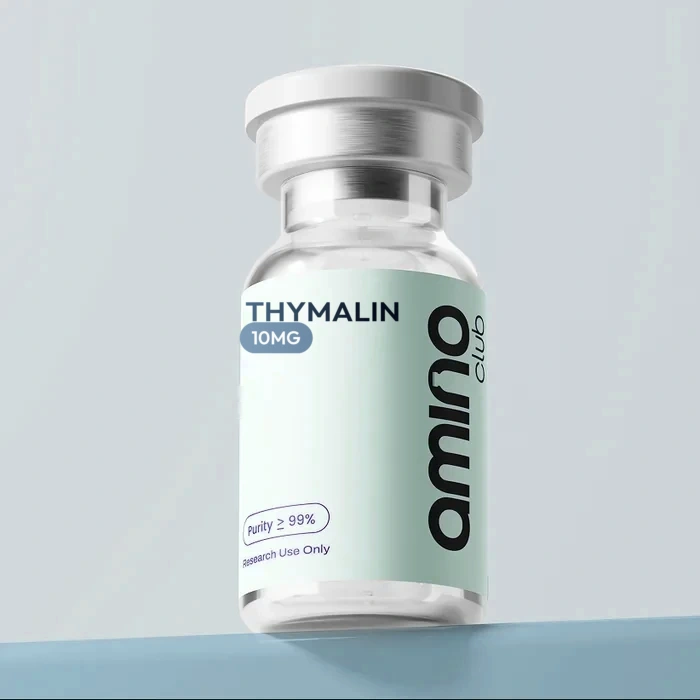
It sits in the longevity group for a structural reason: thymic involution is one of the more reliably documented features of ageing, as the thymus shrinks and its output of naive T cells falls. Comparison with Thymalin is instructive, since one is a characterised molecule with regulatory approval and the other a preparation of incompletely specified composition. Published work is indexed on PubMed.
Handling Thymosin Alpha-1
Supplied lyophilised. At 28 residues with an N-terminal acetyl group, this sits among the larger peptides in the catalogue and is correspondingly more prone to aggregation in solution than the short sequences beside it.
Reconstitute by directing solvent down the vial wall, swirl rather than shake, keep solutions cold and freshly prepared, and avoid freeze-thaw cycling. Store sealed vials at -20°C. Solvent options are under reconstitution supplies.
Common questions about Thymosin Alpha-1
Is Thymosin Alpha-1 the same as thymalfasin?
Yes. Thymalfasin is the name under which it is used clinically in several countries.
Why does the N-terminal acetyl group matter?
It is part of the native molecule. A version without it is a different compound, so the acetylation is checked as part of identity.
How does it differ from Thymalin?
Thymosin Alpha-1 is one defined, characterised peptide. Thymalin is a thymic extract containing a mixture of peptides with no single defined sequence.
Why is it in the longevity group?
The thymus shrinks with age and produces fewer new T cells. A thymic peptide is studied directly against that feature of immune ageing.
How should it be stored?
Sealed vials at -20°C. Solutions are reconstituted gently, kept cold and not frozen and thawed.