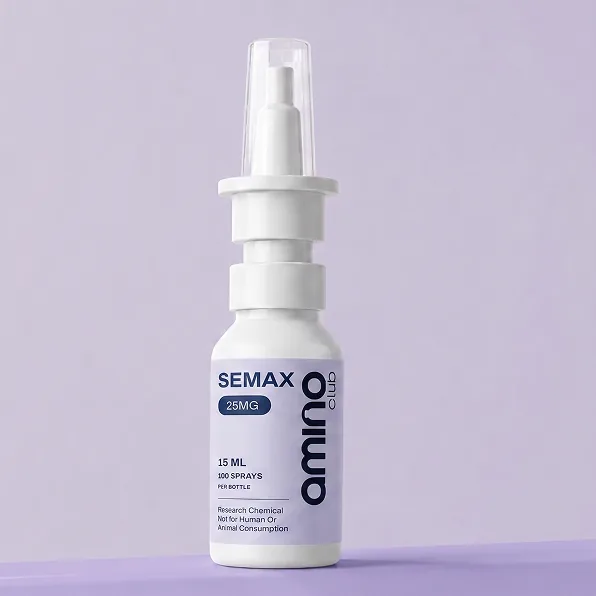
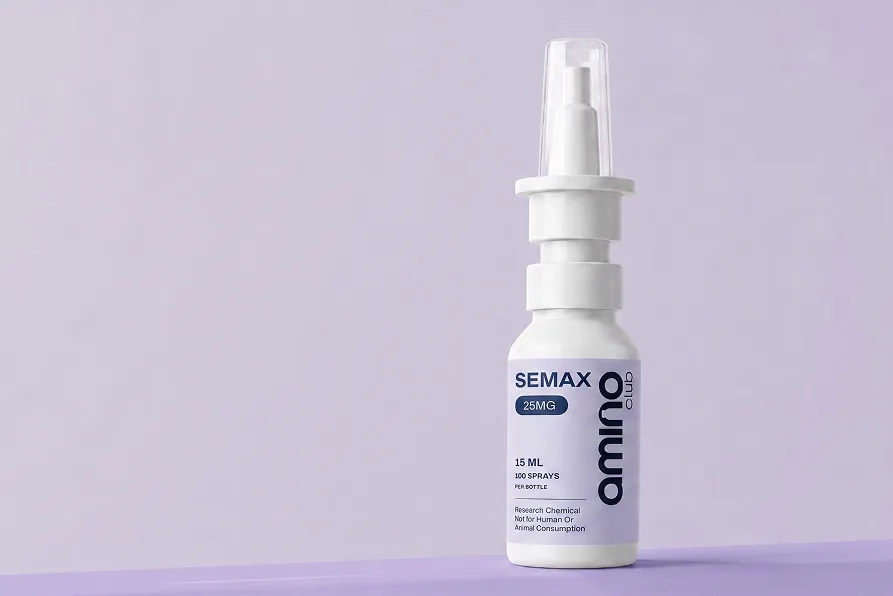
Semax in the format most of its published research actually used — a metered intranasal solution rather than a vial.
- Contains
- Semax (sequence, formula and CAS number are on the vial product page)
- Content
- 25mg in a metered 25ml bottle
- Presentation
- ready-to-use metered intranasal solution; no reconstitution step
- Purity
- ≥99% by HPLC, identity confirmed by mass spectrometry
- Released against
- the Certificate of Analysis for its own batch
About Semax Nasal Spray
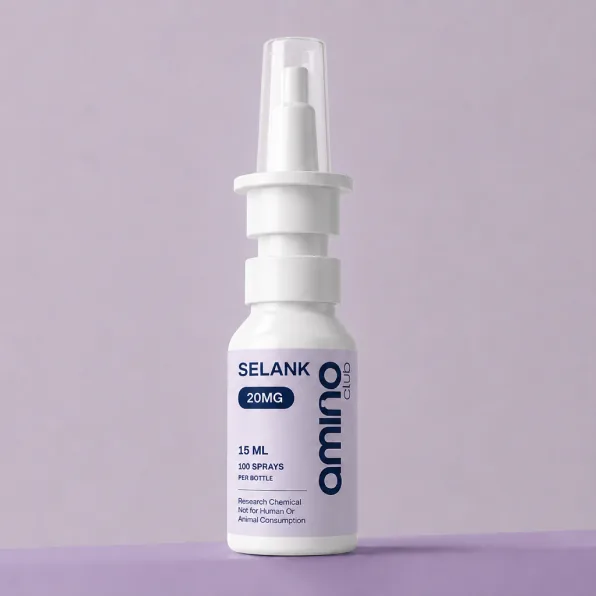
This supplies Semax — the ACTH(4-7) analogue with a Pro-Gly-Pro tail — in solution in a metered 25ml intranasal bottle.
For this compound the presentation is more than a convenience. A substantial share of the primary literature on Semax used intranasal administration, so a study intending to align with that body of work is matching the published method rather than merely choosing a format.
What the research covers
The research context is unchanged: BDNF and TrkB expression, noradrenergic and dopaminergic modulation, attention and memory endpoints, and neuroprotection in ischaemia models.
Because the concentration is fixed, this presentation suits protocols needing consistency between sessions rather than control over dose. See Semax versus Selank for how it differs from the compound it is most often studied beside. The cognitive and sleep research peptides hub covers this group.
Handling Semax Nasal Spray
Supplied as a metered preparation, so there is no reconstitution step and no reconstitution error — and no opportunity to set the concentration, which is fixed at what is supplied.
Store cold, upright and away from light. A peptide already in aqueous solution has a shorter usable life than a sealed lyophilised vial; this format trades shelf stability for immediate usability and for consistency between sessions.
Other formats
The same compound is supplied as a lyophilised Semax vial, which gives control over concentration that a fixed solution cannot.
Common questions about Semax Nasal Spray
Is this the same compound as the Semax vial?
Yes. The compound is identical; it is supplied already in solution in a metered intranasal bottle instead of as a lyophilised powder.
When is the nasal spray the better choice?
When the intranasal route is itself part of the study design, or when consistency between sessions matters more than control over concentration.
When is the vial the better choice?
When the protocol needs to set its own concentration or run dose-ranging. A fixed-concentration solution cannot be varied.
How long does the spray remain usable?
A peptide in solution has a shorter usable life than a sealed lyophilised vial. Keep the bottle cold, upright and protected from light, and treat its life as limited.