A sixteen-residue peptide encoded in mitochondrial DNA rather than the nuclear genome — which is the most interesting thing about it.
About MOTS-C
MOTS-C is a sixteen-residue peptide whose open reading frame sits within the mitochondrial 12S rRNA gene. That makes it a mitochondrial-derived peptide: encoded by mtDNA, not by nuclear DNA, which overturns the older assumption that the mitochondrial genome codes only for respiratory chain components.
It acts as a signal rather than as a structural component, and it has been reported to translocate to the nucleus under metabolic stress and influence nuclear gene expression — retrograde signalling from mitochondrion to nucleus.
What the research covers
Work covers AMPK activation and the folate-dependent one-carbon pathway proposed as its upstream route, insulin sensitivity and glucose handling in metabolic models, and exercise physiology, where circulating concentrations rise with activity.
The nuclear translocation strand is the most distinctive and the least settled. SS-31 addresses mitochondrial function from a structural rather than a signalling angle, which makes the two a useful pairing. The longevity research peptides hub sets out the four separate hypotheses this group covers.
MOTS-C specification
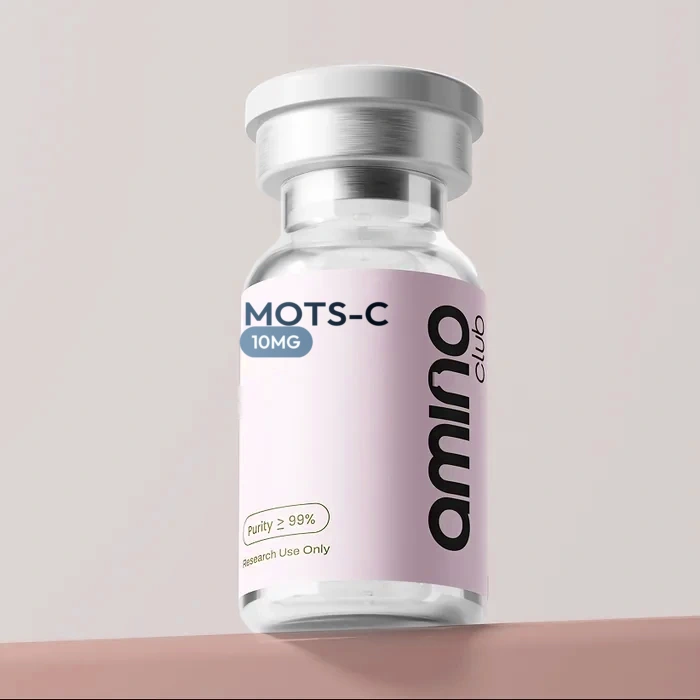
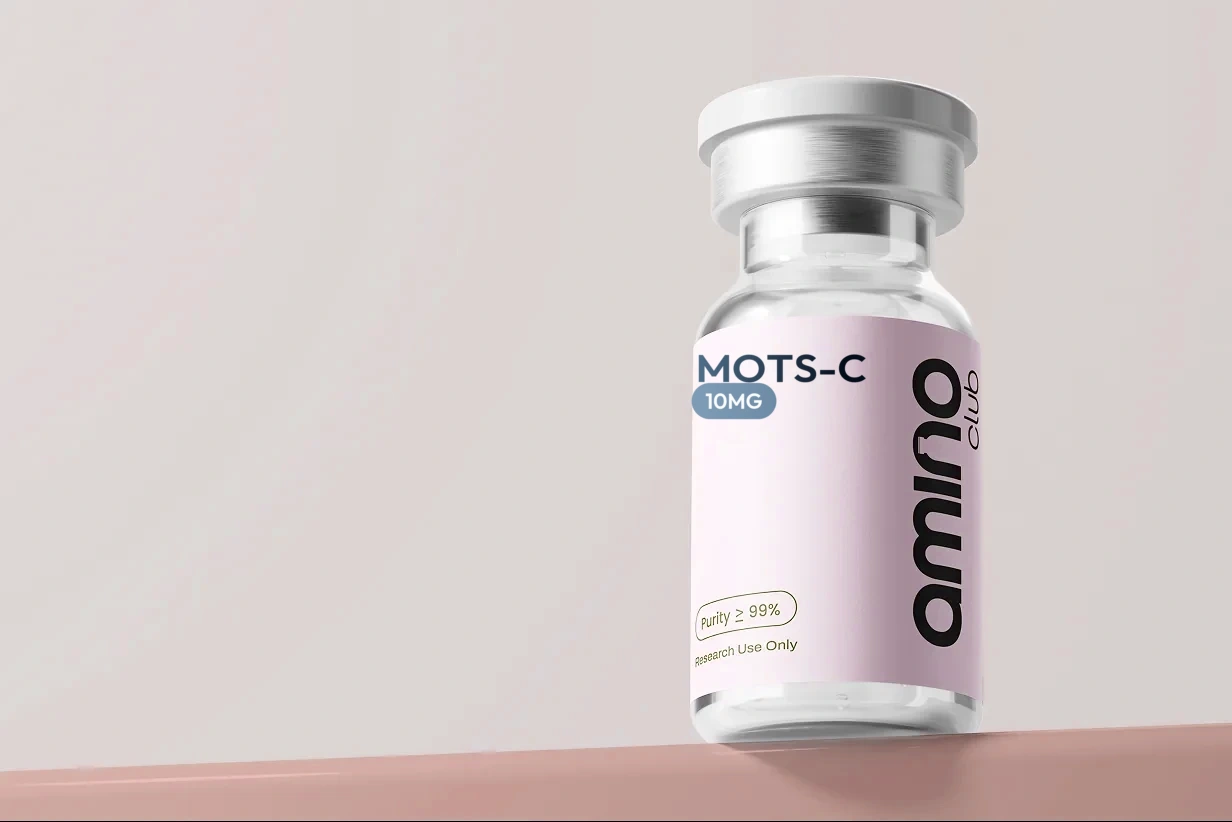
- Strengths available: 10mg, 20mg, 40mg
- Presentation: vial
- Purity: ≥99% by HPLC, identity confirmed by mass spectrometry
- Released against: the Certificate of Analysis for its own batch
Handling MOTS-C
Supplied lyophilised. A sixteen-residue peptide is moderately robust dry and adsorption-prone in dilute solution, as with most of the short sequences in this catalogue.
Gentle reconstitution, cold sealed storage and freshly prepared working solutions. Avoid repeated freeze-thaw of reconstituted material.
Solvent options are under reconstitution supplies.
Further reading: the MOTS-c guide in the Amino Club research library covers the mechanism and the published work in more detail.
Certificates, delivery and terms
This batch ships with the Certificate of Analysis carrying the batch number printed on its label; how that is tested and released is set out on the lab testing page. Delivery, customs and returns are covered on the shipping page, common questions on the FAQ, and quantity pricing through bulk and wholesale. Supplied for in-vitro laboratory research only: not a medicine, not a supplement, not for human or veterinary use, and no dosing or administration guidance is provided — see the research use policy.