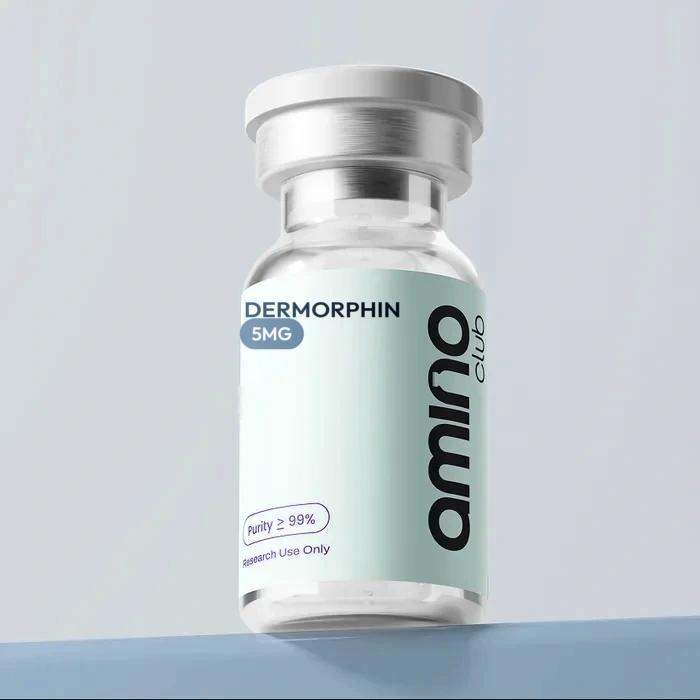
A heptapeptide from amphibian skin containing a D-amino acid — one of the few naturally occurring peptides that does — and a highly selective mu-opioid agonist.
About Dermorphin
Dermorphin is a heptapeptide originally isolated from the skin secretions of South American tree frogs of the genus Phyllomedusa. Its defining structural feature is D-alanine at position 2, which is unusual: naturally occurring peptides are almost always built entirely from L-amino acids.
That D-residue confers resistance to peptidase cleavage and is central to its very high selectivity for the mu-opioid receptor over the delta and kappa subtypes. It is a research tool valued for that selectivity rather than for potency alone.
What the research covers
Work uses it as a selective mu-opioid receptor probe: receptor binding and selectivity profiling, G-protein coupling and arrestin recruitment, and receptor distribution studies. Its peptidase resistance makes it usable in preparations where a conventional opioid peptide would be degraded.
Comparative pharmacology against non-peptide mu agonists is a recurring design, since a peptide agonist and an alkaloid agonist at the same receptor can produce different signalling bias. The tissue repair research peptides hub sets out the mechanisms in this group.
Dermorphin specification
- Strength: 5mg
- Presentation: vial
- Purity: ≥99% by HPLC, identity confirmed by mass spectrometry
- Released against: the Certificate of Analysis for its own batch
- Reference: DR5
Handling Dermorphin
Supplied lyophilised. The D-alanine residue makes this sequence considerably more stable against proteolysis than an equivalent all-L peptide, which is an advantage in cell and tissue preparations where peptidases are present.
Identity confirmation is the part of testing that matters most here: the all-L analogue has the same mass and a dramatically different receptor profile, so mass spectrometry alone cannot distinguish them and the synthesis route is what assures stereochemistry.
Solvent options are under reconstitution supplies.
Further reading: the Dermorphin guide in the Amino Club research library covers the mechanism and the published work in more detail.
Certificates, delivery and terms
This batch ships with the Certificate of Analysis carrying the batch number printed on its label; how that is tested and released is set out on the lab testing page. Delivery, customs and returns are covered on the shipping page, common questions on the FAQ, and quantity pricing through bulk and wholesale. Supplied for in-vitro laboratory research only: not a medicine, not a supplement, not for human or veterinary use, and no dosing or administration guidance is provided — see the research use policy.